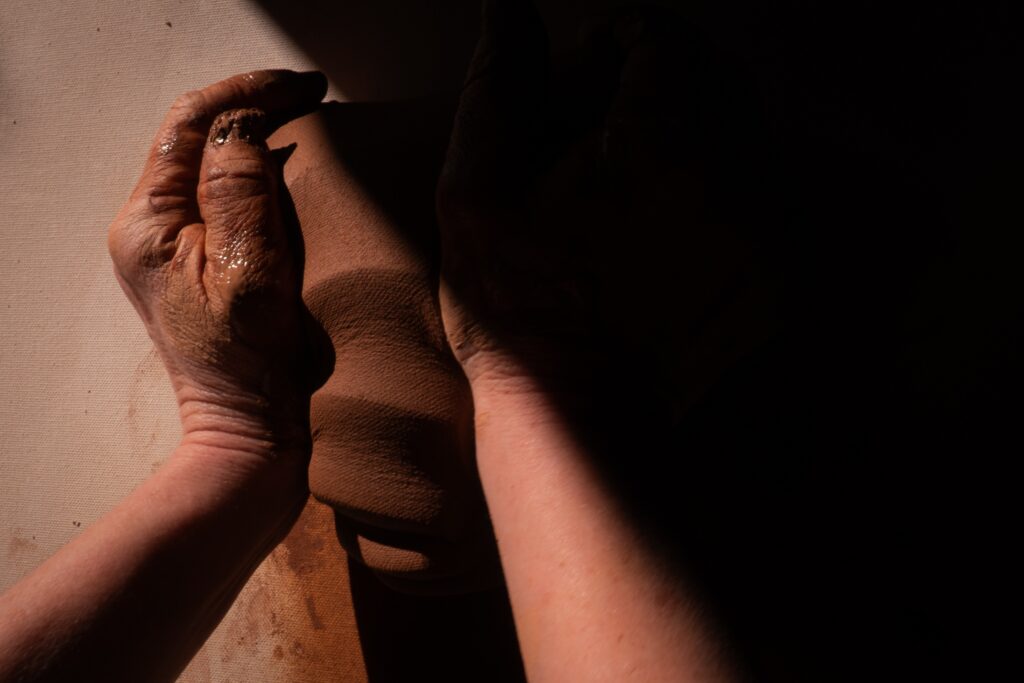
‘Spiritual bypassing’ is a term for when people use spirituality as a way to avoid a difficult truth, instead of fully experiencing it. Seeking refuge in principles as a way to ignore pain. So what does it mean to experience truth in your body?
We’re all interconnected
Spiritual folk love telling us that we’re all inescapably interconnected. You and I, we are made from the same matter as stars. And trees. And ping pong tables. But we are not stars, trees or ping pong tables… Are we?
Our physical bodies exist. But our teeny tiny cells are made from vast galaxies of atoms, spaced so far apart that, mostly, we are empty space. In this vast emptiness, the energy of our universe flows.

And the physical cluster of molecules that we call ‘body’ is awakened by the life-giving breath of the Divine – that illuminating spark which animates our stardust particles through the stunning miracle of consciousness. It’s that immeasurable essence that makes me me, and you you.
Similar, but different. Physical and spiritual. Soft clay and light.
But in what balance?
Are you ‘bypassing’ your body?
Emotions can hurt. But there are many ways we can use spirituality as an excuse to avoid experiencing painful truths.
This might sound like:
“rise above”
“the machine wants to distract you”
“good vibes only”
“other people have it worse”
“keep your energy clean”
“avoiding drama”
“it wasn’t aligned with you”
“forgive and forget”
“it’s not a big deal”
Notice how these phrases could easily keep you away from facing up to things that might really hurt? Or from holding yourself, or others, accountable?

Ignoring your body’s needs
Your body is the means through which you experience yourself, as well as everything other than the self. It grows. Feels. Interprets. And importantly, your feelings happen in your body, which means your emotional wounds (not just your physical wounds) live here.
So if you’re escaping your feelings, it can often mean you’re bypassing the needs of your body too.
You might find that when your body is hurting, you ignore your pain. If your body is hungry, you don’t fuel yourself. If your body is under attack, you might struggle to defend yourself. You might bump into things a lot, or not know where you’re going. You might struggle with knowing the time, or staying focused.
You might think of your body as separate from you, when it is in fact you…
If this sounds familiar, don’t worry, there are things that can help.

A therapist once told me: “you are not living in your body.”
And I wonder, for how many of us is this statement true?
In a world of daydreams, meditative states and thought-experiments – I’ve spent a lot of time escaping life; fleeing to a world in my head. I’m great at it!
I can zone out of a conversation, an exam, a job interview even. I’m with you, but also I’m up there flying high with the birds, gliding on the breeze, or diving deep into the ocean depths, searching for pearls… Connected to absolutely everything – except the body I’m in. Feeling everything one can feel – except my immediate physical reality.
Sounds kind of fun, doesn’t it? While it definitely has its upsides, of course there is a catch…
When you’re on the run, you have to keep on running. It’s exhausting. And eventually, everything you’re running from catches up with you in the end.
That’s usually when your mental and/or physical health plummets.
But how do you switch off flight mode and come back home to your body, when you’re not sure what being in your body should feel like?

Where does my body begin and end?
“The parable of the believers in their affection, mercy, and compassion for each other is that of a body. When any limb aches, the whole body reacts with sleeplessness and fever.” — Prophet Muhammad (pbuh)
When a therapist tells me I am disconnected from my body, I listen.
And when Allah’s Messenger tells me that I am in fact a part of another body – the ummah (global Muslim community) – I listen.
Both statements, profound and perspective-altering, deserve careful consideration. Because the phrase ‘you are not living in your body’ has an odd ring to it.
How do I focus on being present in my physical experience, while also participating in a metaphysical collective experience? Is it possible?
What is self-ish and what is self-less?
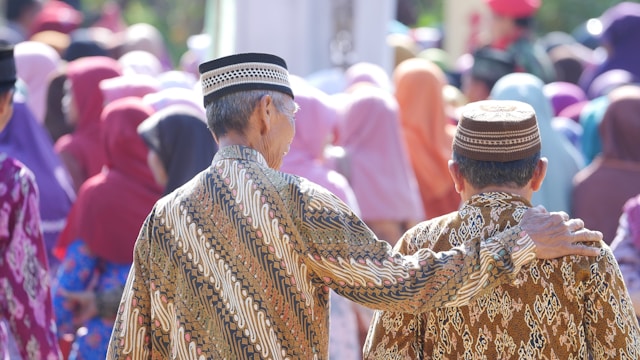
Learning from the body of the Ummah
The Muslim ummah is a totally diverse collective of people who all share one trait; we bear witness to Allah’s truth, and in so doing, consciously commit to serving Allah above all else.
You are not you without the ummah. And the ummah is not the ummah without you.
The ummah, (and by extension the world of truth), doesn’t need an approximation of you, or the gist of you, or a dream of you – it needs all of you, fully embodied, in all your glory.
Because if you’re not ok, we’re not ok. This is how much you matter, and how much love and support you’re due, just because you are you.
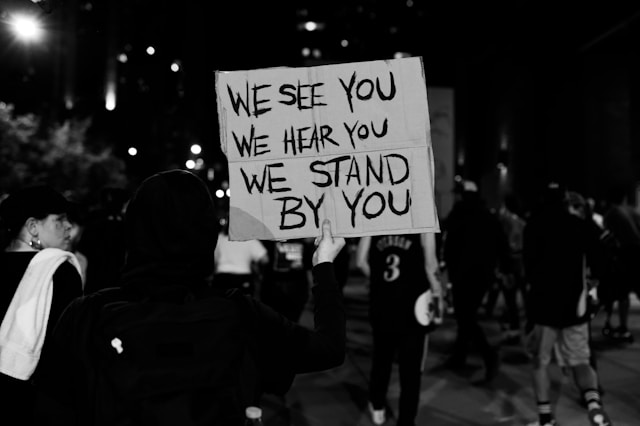
Every du’a made by the ummah, for the ummah, includes you.
And likewise, your prayers are not just a mercy for you, they can help heal us all, in a magnificent energetic exchange.
Our spirituality moves us, connects us, and unites us, so that we flow together like water molecules in a river, towards the ocean of Allah’s love. We cascade in prayer falling in sujood like waves and rising again – every second, somewhere on earth, it is a new dawn, and the athan calls: come to prayer, come to success!
You are a part of the endless symphony of Divine praise.
When you think of this as an extension of your own body, how does it make you feel? How does it shape your sense of self and spiritual purpose?
“You are God’s witnesses over mankind.” — Prophet Muhammad (pbuh)
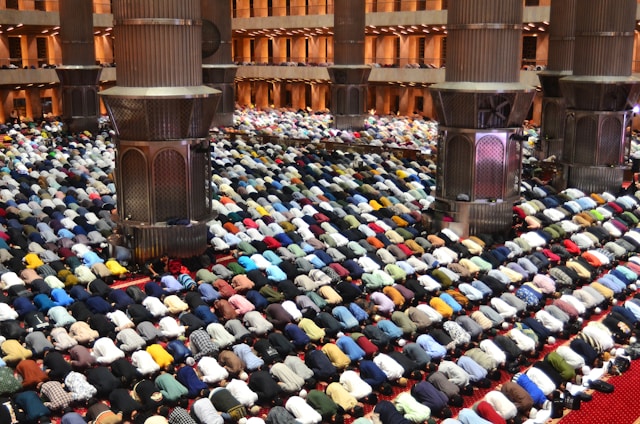
You have a mission to fulfil
You cannot stand tall and equal among those who witness the truth of Allah, nor witness the truth of your neighbour, if you are scared to witness yourself.
You need to witness others to ease their pain. And your pain needs to be witnessed to heal. You must be able to meet your own gaze and accept what you see and what you feel. Dismissing your feelings, pretending to be insignificant, and minimising your experiences is not an option. Because only when you’re not running away from yourself, can you meaningfully run towards the people who need you – and who you need too.
“Every believer is the mirror of his brother. He protects him against loss and defends him behind his back.” — Prophet Muhammad (pbuh).
You’ll find it hard to connect deeply with others if you are not deeply connected with yourself. Community is your birthright – you’re not meant to go through this life disconnected.

How do I know if I am ‘spiritually bypassing’?
If we’re all a fine measure of water and clay and spirit… There is a litmus test to figure out whether we’re using ‘spirituality’ to integrate all our different aspects – to experience life and connect deeply with others – or to avoid, dissociate and hide from it.
That test is justice, achieved through balance.
“Thus did we make you a middle community, that you may be witnesses for mankind and that the Messenger may be a witness for you.” — Qur’an 2:143
Justice lives in a house of balance – sitting at the middle point of two extremes.

“He raised the heavens and set up everything in balance, so that you would maintain justice. Therefore, maintain just measure and do not transgress against the Balance.” — Qur’an 55:7-9
When you’re struggling with your mental health – it means something, somewhere, is off-balance.
If we live to serve justice, our aim is balance.
This might look like:
- taking care of your body with compassion – balance in food, exercise, rest, work etc
- Giving yourself genuine permission to feel all your feelings (even the ones you think you shouldn’t have) – neither ignoring, nor catastrophizing
- listening to what your pain is telling you – not dismissing, and without judging
- Healing your emotional wounds – with help and support from your community
- Asking for help – with hope and intention, without despair or outsourcing responsibility
- balancing faith and prayer with healthy action
Spirituality without justice, is self-worship – and the unchecked ego can be a tyrant.
If you’re not sure where the scales tip, sincere prayer is your best ally, (surah al Fatiha is a great du’a if you don’t know where to start).
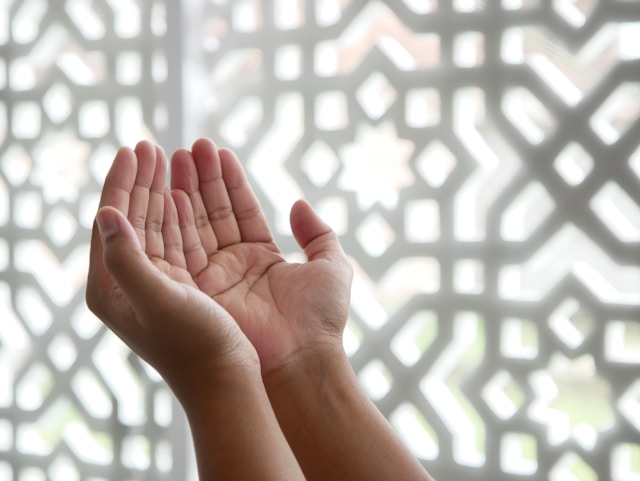
Practical ways to connect to your body
If you’re feeling disconnected from your body, it’s often best to get support from a therapist, if you can, to help you try different techniques to help you feel safe in your body.
A trained psychotherapist can help you with the root cause of why you’re feeling unsafe, and help you deal with any trauma you might have experienced.
Here are a few things which can also help:
- Breathing exercises – try practising daily
- Implement healthy boundaries – check out our self-love and self-care tips
- Physical touch with someone you love and trust, or massage therapy
- Sit in front of a mirror and gently observe for 10 minutes each day, noticing all the sensations you feel in your body, without judgement
- Yoga (including somatic yoga which is gentle and focused on the mind-body connection and emotional release)
- Talk about your feelings with someone you trust
- Regular gentle exercise, or sport
- Grounding exercises: notice five things you see, four things you feel, three things you can hear, two things you can smell, one thing you can taste

The lesson
It’s time to let go of fear. And self-judgement. And shame. Everything that keeps you distanced from yourself.
Selfish or selfless, in a sense it is the same thing – if we are indeed all part of one body, tasked with bowing to one God. Life is not simply about where you begin and end.
So stop asking: is it selfish? And start asking: is it justice?
And you will find your whole self right there – clay and light.