
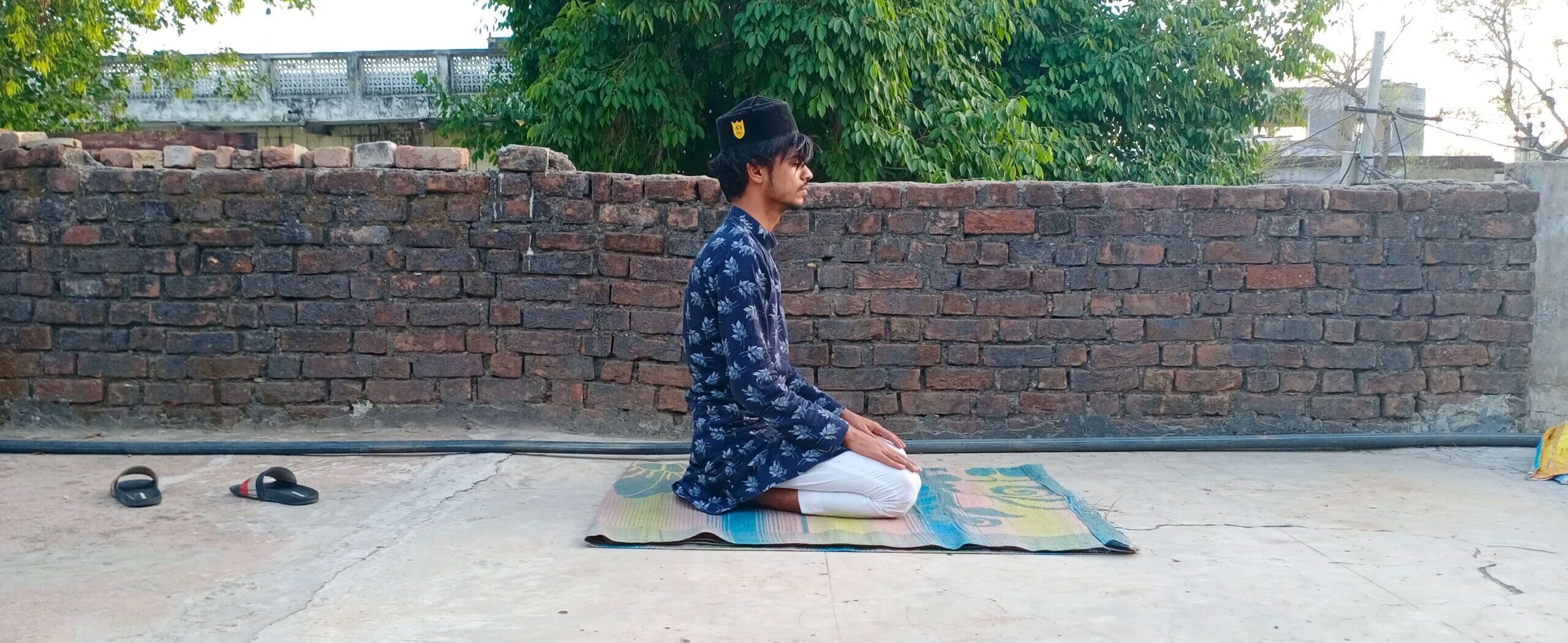
“And when My servants ask you concerning me then [answer] I am near! I answer the prayer of every suppliant when he calls on me. So let them respond to my call and believe in Me, so that they may be guided in the right direction.” — Qur’an 2:186
It can feel annoying and patronising when people respond to your problems by saying “just pray”. Relying on the power of prayer is often easier said than done – but it doesn’t make you a bad Muslim. It doesn’t help if you’re feeling stuck, drowning in problems, surrounded by bad role models, and you’ve developed negative associations with prayer. If praying feels like a chore, empty, boring, difficult, or if you just want to feel a deeper connection with prayer, this page is for you.
This page will help you explore:
1. How prayer can help your mental health?
- What is the real spiritual goal of prayer?
- How prayer shifts your perspective
2. Why isn’t prayer working for me?
- Why do I pray and still feel bad?
- Identifying negative associations with prayer
- Despair vs Gratitude
- Why does it feel like God is not listening?
3. (Re)connecting with prayer
- How to make du’a – speaking from the heart
- (Re)learn to pray salah
4. Struggling with salah (five daily prayers)
- Intention equals progress
- How to mix up your approach
- Staying focused in prayer
1. How prayer can help your mental health
“Call on me and I will answer you.” — Qur’an 40:60
From an Islamic perspective, there is no such thing as having nowhere to turn, or no way out. When the world feels like chaos, prayer can feel like a shelter in the storm. It’s a safe place to express your hidden thoughts, needs and longings to the One who has the power to fulfil our wishes.
Nothing else is certain, Allah’s mercy is.
In a heartbeat, you can speak to the One who created all of existence – wherever you turn, you will find Allah, ready and willing to show you the way forward.
“Praying can be an intense emotional rollercoaster … hope, forgiveness and gratitude, fear, longing, regret and sadness. But at the end there is always relief.”
The spiritual goal of prayer
Muslims are asked by Allah to pray five times a day (salah). And our Prophet’s Sunnah is to be constantly supplicating to Allah in dua. But why?
First, let’s take a big step back…
“And [mention, O Muhammad], when your Lord said to the angels, “Indeed, I will make upon the earth a steward.” They said, “Will You place upon it one who causes corruption therein and sheds blood, while we declare Your praise and sanctify You?” Allah said, “Indeed, I know that which you do not know.” — Qur’an 2:30
The point of any Islamic practice, including prayer, is to develop your moral character so that you become Allah’s ‘khalifah’ on earth. This is sometimes translated as ‘vicegerent’, ‘deputy’, ‘steward’, or ‘guardian’.
In other words, your job as a human, is to become a beacon of light and goodness in this world.
The only way we can strive to be God’s deputies on earth, (doing good, preventing evil, and promoting peace), is by connecting with God. And God gives us dhikr (remembrance), du’a (personal prayer) and salah (ritual prayer) for this exact purpose.
“O mankind, you are those in need of Allah, while Allah is the Free of need, the Praiseworthy.” — Qur’an 35:15
Allah tells us explicitly: prayer is doesn’t benefit Me, it benefits you!
Prayer helps us build our relationship with Allah, moving us closer and closer to Divine love, truth and beauty. Eventually, we can move beyond a state of being merely servants of God, to becoming ‘friends’ of God. The Qur’an describes this special category of Allah’s ‘friends’, and it is clear that the road to reaching this level of unshakeable faith and serenity is often a long and testing one, but the results are more than worthwhile. (If these ideas seem abstract, that’s ok. The point is that the more we invest in loving God, the better our outcomes will be).
No matter what your relationship with Allah is like now, as a human being, you already have a natural connection with Allah, and an instinctive desire to seek Allah’s mercy. It’s simply how you were created. That’s why prayer is an essential part of maintaining good mental health, not an added extra.
“The biggest gamechanger was really processing the fact that prayer doesn’t affect Allah AT ALL. It is 100% for my own benefit. It’s obvious but it’s not. It shifts ‘I have to pray’, to ‘omg I want to pray’. It’s not about running from punishment, but running towards a gift.”
If your connection with Allah connection feels a little blocked, or if you feel like Allah is not answering your prayers, keep reading to figure out what might be getting in your way.
Prayer shapes perspective
Abdullah ibn Mas’ud reported: The Messenger of Allah, (pbuh), laid down upon a reed mat and it left marks on his side. When he woke up… I said, “O Messenger of Allah, why do you not let us [get you a bed]?” The Prophet (pbuh) said, “What is the world to me? What am I to the world? Verily, I am in this world like a rider who seeks shade under a tree, then he moves on and leaves it behind.”
We get negatively affected by so many different things, like; how people treat us, financial worries, work, exams, grief, family drama etc. And ultimately, how we perceive our situation has a big influence on how much life can shake us.
Praying regularly can help us reprioritise: life is short, and some things we think are a big deal won’t mean much to us on Judgment Day – like how we look, how much we earn, or where we live.
What matters is our intentions and our actions – and remembering this can make complicated situations suddenly feel more simple. Prayer creates a space for us to listen to that inner voice calling us towards good deeds which can easily get drowned out, or influenced, by all the worldly noise around us.
That said, even if we’re facing a challenge as insignificant as a broken shoelace, we can still ask Allah for help with it, to reaffirm our faith in a Lord who is higher, greater, kinder and more beautiful than anything we can imagine.
“Even though everything in life is temporary, it does not mean your life doesn’t matter. It does. Every little detail matters to Allah. Your deeds and intentions count. You’re really not out there fighting on your own.”
“Prayer is your personal way to hold yourself to account by reflecting on your day, resetting your intentions, and reminding yourself what you truly value.”
“The only judgement that matters is Allah’s – not the people stressing us out with their opinions.”
“Hope is relief in itself. For Allah, anything is possible – even if we can’t see a way out, Allah can. You’re allowed to let go of that heavy burden, it’s not all on you.”
“Sometimes I have these moments of absolute relief when I pray. I can be in the middle of what seems like the end of the world, and then suddenly it’s like, oh yeah, this will pass. I don’t know when, or how, but it will. Allah’s got me.”
Salah invites us to reflect on our actions throughout the day to ensure we’re keeping aligned with our personal truth and goal of reaching paradise. This can:
- eliminate anxiety
- lower stress levels and blood pressure
- increase feelings of peace, clarity, forgiveness, generosity, acceptance, confidence, optimism, humility and self-worth
- increase our intuition
And don’t forget, praying for forgiveness is a powerful shield from evil too.
2. Why isn’t prayer working for me?
“Successful indeed are the believers, who humble themselves in prayer” – Qur’an 23:1-2
Remember, life will always be full of challenges. And as a human, you will always feel emotions – including uncomfortable ones.
Prayer and spiritual growth are not going to turn you into an angel who never experiences problems or suffering. Even the prophets suffered. So let go of any guilt about the way you’re feeling.
Asking ‘why?’ is not the same as giving up. If you’ve made it this far down the page, chances are, you’re exactly ready to find some answers, inshallah.
Why do I pray and still feel bad?
“Your Lord has not forsaken you, nor does he hate you” – Qur’an 19:23
We are complicated beings. Mind, body and soul all have their needs. How can you expect to feel good if you’re not treating yourself with all the love, compassion and care you deserve? To feel healthy, empowered and optimistic about life, good spiritual habits must be supported by:
- working on self-love,
- implementing good self-care,
- going through a process of trauma-healing,
- and freely exploring your spirituality without guilt or shame.
Negative associations with prayer
Even if you feel faith in your heart, it’s certainly possible to have learnt to associate prayer with negative thoughts and feelings. For example, if you were raised by pushy parents who always nagged you about praying, or if you felt guilt-tripped into praying, if you pray just to avoid being punished, or you found praying embarrassing because none of your friends ever prayed… over time you might have built some inner resistance to praying, perhaps without even knowing.
Feelings of guilt, shame, pressure, unworthiness, and discomfort are never going to be helpful incentives to do anything. But feelings of curiosity, love, and hope are.
Identifying and honestly acknowledging your negative feelings is not only brave, but also the first step to healing them. You could do this on your own, but it might help to talk it through with a trusted friend or therapist.
“Praying was something we were forced to do as children. And when you’re young it feels like way too much. I was taught Islam in a very strict way – it was all, ‘don’t do this, don’t do that, haram, haram, haram, don’t have any fun.’ I think religious trauma is a huge problem in our community. We’re taught so many toxic things about something that should be joyful and fulfilling. If you’re struggling with prayer you’re not alone.”
Why does it feel like God is not listening?
“Man was created of haste. I will show you My signs, so do not impatiently urge Me.” — Qur’an 21:37
Impatience is natural, especially when we’re enduring suffering. It doesn’t mean you don’t have faith. It can, however, sometimes be a hint that you need to be really honest with yourself about how much more attached you are to the thing you are praying for, than you are attached to the feeling of trust in Allah. It’s easy for us to forget that we don’t actually know best, we just think we do.
If you’re 100% laser focused on getting what you want, you might be ignoring the messages God is sending you about other things. That ‘stuck’ feeling will stick around until you learn to let go, and let your attention change direction. Allah will prepare the best outcome for you, if you ask with humility, trust, and patience.
- Blog article: Letting Go – a Spiritual Balancing Act
“Do you think you will be admitted into Paradise without being tested…? They were afflicted with suffering and hardship and were so shaken that [even] the Messenger and the believers with him cried out, “When will Allah’s help come?” Indeed, Allah’s help is [always] near.” – Qur’an 2:214
The stories of our Prophets in the Qur’an are filled with endless lessons. Can you find a Prophet who did not have their patience tested? But they show us, we can get through it – help always arrives, and the reward for patience is always beyond our imagination.
“The best reminder I had was that when you ask for something, the conversation between you and Allah keeps happening throughout your day – through your actions, intentions, level of effort, level of trust/fearlessness, level of patience, gratitude. You have to be honest about your willingness to learn lessons, seize opportunities, and humbly listen to the answers Allah is sending you.”
“Someone reminded me that praying isn’t like going to a vending machine where you ask and the thing you want drops magically from the sky. It’s an interactive conversation with Allah. Yes it can lead to miracles, but also learning and growing. When I approached du’a less as about getting stuff and more about building a relationship with Allah the game changed.”
“You will always get your answers but not always in the ways you expect. You suddenly appreciate every door that closes and every road that opens. Now I know how to ‘let go and let God’ – as the saying goes.”
Despair vs gratitude
“And when the messengers despaired and their people thought the messengers had been denied help, Our help came to them [at last].” — Qur’an 12:110
Our level of gratitude shapes our ability to feel content and happy with what we have. It can also affect our level of trust in Allah. It’s no coincidence that the Prophet Muhammad (pbuh) and the holy Qur’an place such a huge emphasis on being grateful.
Prayer is not just about pouring your heart out about what’s going wrong. It is also about refocusing our attention on the good things in our life, which teaches us to find joy in even testing circumstances. This can feel hard when life gets tough, and it’s a topic that deserves a whole section for itself, so do check out our gratitude page for help with this.
If you’re really struggling with patience, or with trusting Allah, that’s completely relatable. I strongly recommend taking the spiritual health check to help you really identify what else might be blocking you on a deeper level – spiritually, emotionally, or mentally.
3. (Re)connecting with prayer
“We indeed created man; and We know what his soul whispers within him, and We are nearer to him than the jugular vein.” — Qur’an 50:16
“Du’a is worship itself.” – Prophet Muhammad (pbuh)
Speaking to Allah (du’a) is easy. Anyone can do it. You don’t need any special skills; just faith and sincerity. Remember, no matter who you are, or what you are going through, Allah says, “Call on me and I will answer you.” — Qur’an 40:60.
A life changing conversation with Allah can happen anywhere, anytime, and in any situation.
If you’re struggling to connect with prayer, take the pressure off. There’s no right or wrong way to feel when you pray. Small consistent efforts to speak with Allah will get you used to the feeling of prayer. You don’t need to tell anyone about your experiences – or explain or justify yourself if you don’t want to.
How to make du’a: speak from your heart
Traditionally, it’s considered good etiquette to praise Allah, send blessings on the Prophet (pbuh) and express gratitude for the blessings you have before asking for more. Get tips on increasing gratitude even if you’re not feeling it.
Prayer is easy, don’t overthink it. You’re speaking to the One who loves you.
Every prayer/du’a is your personal conversation with God, so just speak from your heart. Maybe you don’t have much to say – that’s ok. If you look at the du’a’s of the prophet’s in the Qur’an, you’ll notice they’re all short and sweet. It’s not about length, it’s about sincerity.
Sometimes prayer can be in the form of dhikr (remembrance of Allah). This is as simple as consciously remembering Allah in your daily life, or contemplating Allah’s names, during meditation.
Ya Rabb (O Lord), you are the Al Wadud (the All Loving) so increase me in your love.
“It’s a relief knowing I don’t have to explain myself. Allah already knows.”
“Sometimes when I pray I get really angry. It’s like all my deep, dark frustrations come out. I know in front of God I can’t hide them, and I feel guilty, but it’s also kind of a relief.”
“Pouring out my heart to God is the absolute best feeling. I have nothing to compare it to. I think it’s because no one else understands you the way God does. And no one else has the power to help you the way God does. It’s sad my non-Muslim friends can’t relate to this part of my life.”
“Sometimes I feel a bit disconnected from my faith and don’t pray much. But when I don’t know what to do, I like having somewhere to turn.”
“Speaking to Allah is true freedom. Allah is the Creator, who has power over everything. Who else do you want to speak to when you’re in trouble? Who else do you want closeness with? Who could possibly love you more and help better? Who are you scared of when Allah is protecting you? Think about that and it really sets you free. Whatever you are going through, Allah hears you.”
How to learn to pray salah
“Take on only as much as you can do of good deeds, for the best of deeds is that which is done consistently, even if it is little.” – Prophet Muhammad (pbuh)
If you’ve never been taught how to pray salah, or if you’ve just forgotten, don’t worry.
A good place to start is by trying the ‘Namaz App’ available on Google Play and the Apple App Store.
You could also ask to a Muslim friend to pray with you, or a local imam, or check out YouTube for ‘how to’ videos that make you feel comfortable.
And remember, you can always ask Allah to guide you to the perfect resource(s) suited for your individual needs and learning style.
Salah is a journey – it won’t always feel the same
“When I do wudu I visualise a white light surrounding me and washing all the sins, bad thoughts, and feelings away.”
“Praying on time has helped me with depression because it forces me to get up off my bed even when I feel like I can’t move. Having to make wudu (wash before praying) snaps me out of it and wakes me up. I feel like I’ve achieved something when I manage to do all five prayers. And especially in the evening, I feel like I get a lot off my chest when I speak to God.”
“When I feel anxiety I pray two rakats [units of prayer] just asking for help or istikhara [guidance]. It calms me down knowing my worries are in the hands of The Most Merciful.”
“Self-care to me is fajr (dawn prayer). It is my favourite time. It’s like the whole world has stopped, there’s peace and silence. It’s my sacred time where I can just breathe. I try not to look at my phone or get distracted. I sit on my prayer mat and thank God for everything I have. Then I set my intentions for the day ahead and ask for help with anything I’m worried about. It was hard at first to get into a routine, but I’m glad I pushed myself because it’s had the biggest impact on my mental health.”
“It’s a timeout from my worries. A tiny but mighty reset built into my routine.”
“Personally, I think there’s a huge learning curve that comes with praying salah that is so underestimated. Dua is easy – you are just talking to Allah. But salah requires you to take a huge psychological leap and realise – if I want Jannah, I have to make sacrifices. I have to organise my life around it… but I guess that’s why Islam means submission.”
“Salah means you’re constantly having to remind yourself to let go. You’re not the one in control – which is incredibly freeing at soul level, but at mind/body level it’s not always easy. You’re constantly pulling yourself out of whatever is going on in your life and bringing yourself back to your core beliefs – to stand before Allah.”
4. Struggling with five daily prayers
“Warn mankind and give good tidings to those who believe that they shall have a station of sincerity with their Lord” – Qur’an 10:2
Intention equals progress
There are lots of reasons why we might all struggle with the daily prayers. These could be faith-based, lifestyle-based, culture-based, or sometimes even trauma-based.
If you’re struggling with any feelings of guilt or shame around not praying salah, these feelings can affect your self-esteem and lead to depression, anxiety, or low confidence. In order to feel better you might seek distractions, or turn away from things that remind you of prayer – but the more you run away from these feelings, the bigger they’ll become. And that’s not great for your mental wellbeing. But things can change.
Remember – the aim of your prayer is sincerity, not perfection. It’s the effort and intention that count. Give yourself permission to go at your own pace.
“Salah always felt a bit irrelevant to my life until I started studying Islam more deeply out of personal interest. I had to really get to grips with the concept of Allah, and what life means, in order to get a perspective on how praying is genuinely better for my life than not praying. Without that I think I’d still have a really on-off, distant relationship with salah.”
“I used to shout at anyone who would even mention praying to me. I didn’t like being told what to do, or being given religious lectures by literally anyone. I saw everyone as a hypocrite. I think it was because deep down I felt like a hypocrite. I carried a lot of pain from my religious upbringing and it had really gotten in the way of my relationship with Allah. Praying used to trigger me, so I didn’t do it, even though I knew I should. Healing my religious trauma and childhood trauma was a really big deal for my mental health and quality of life generally.”
How to mix up your approach
One thing is clear, if you’re struggling, and you keep approaching salah, in the same old way, you’re likely to feel the same way towards it.
What can you do to mix things up? Have you tried:
- Try to do one prayer at a time and build gradually, rather than doing too much at once?
- Find a prayer buddy to encourage you, and text you at prayer times or pray with you.
- Create a beautiful prayer space (if you can). Declutter, use a nice clean prayer mat, perhaps spray a room spray – to inspire a calm, peaceful atmosphere.
- Download a prayer times app for regular reminders.
- Reframe your self-talk: if you find yourself saying ‘I have to pray’, instead say. ‘I have the chance to pray,’ or ‘Allah is calling me to success’.
- Work on self-care – if you’re overburdened, exhausted and undernourished, everything will feel hard!
- Clean up your social media – if you’re seeing content which makes you feel far from Allah, start following accounts which inspire you and encourage you. Check out this page for inspo. (Remember you don’t have to follow anyone because you think you should).
- Limit time with people who are far from Allah. This isn’t always possible, and it doesn’t mean you cannot have friends who don’t pray, but it’s good to be mindful that we become like the people we spend most time with. So choose your company wisely. Perfect people do not exist, but you can ask Allah to send good people your way, especially if you don’t have good influences in your life right now.
- Increase in dhikr throughout the day – you can get tips here.
- Focus on rewards not punishments – Allah is not out to get you. Treat yourself when you meet your goal.
- Trust that Allah sees your effort and intention. No matter how many times you miss your target, you’re still getting rewarded for trying – the odds for success are stacked in your favour.
- Invest in looking after your emotional health – if you are not sure where to start, start with rediscovering your feelings of self-love, or explore the pages on this site that speak to you.
- Remember, something is always better than nothing. Progress is more important than perfection.
Salah really doesn’t have to feel like a box-ticking exercise, it can feel like an enjoyable spiritual and mental wellbeing essential, so take your time exploring how to make it feel good for you.
Staying focused in prayer
If you’re struggling to keep all your prayers, or when you pray you feel absent-minded or robotic, give yourself credit for showing up. Be gentle with yourself – no one feels 100% focused all the time!
Your job is to turn to Allah again and again. It’s a lifelong marathon. There will be times where you’re tuned in, and times where you’re distracted. If you notice your mind wandering, just take a breath, and bring your attention gently back however many times it takes. Prayer is a practice after all, so keep practicing!
“I think what people forget is that salah takes practice and perseverance. I think sometimes we’re taught, ‘if you have faith, salah will be super easy and you’ll never want to do anything but praying. Oh and if you struggle with salah it means you’re a bad Muslim.’ When actually prayer was introduced gradually into the community of the Prophet (pbuh), over a period of years. Habits take a while to form. My advice is keep making an effort – slowly you’ll see changes.”
“Honestly as a teen I struggled with praying generally. In my early 20s I started praying five times a day, but it was mostly quite robotic. It was only after I went through a bit of a turbulent time and started my ‘healing journey’ that praying clicked into place. But it wasn’t an overnight thing.”
“I feel like what no one teaches you is that it’s meant to be a journey and your relationship with prayer keeps on evolving. Don’t worry if everyone is pretending to be a saint. They’re having ups and downs too. You won’t always feel amazing after every prayer, but over time you’ll wonder what you ever did without it. Take your time, enjoy the process. And don’t be hard on yourself – Allah is more merciful than you realise. Your best is good enough – keep going.”
Change requires action
- Read more about healing from trauma
- Connect with your purpose in life
- Build feelings of self-love
- Read about repentance and forgiveness