
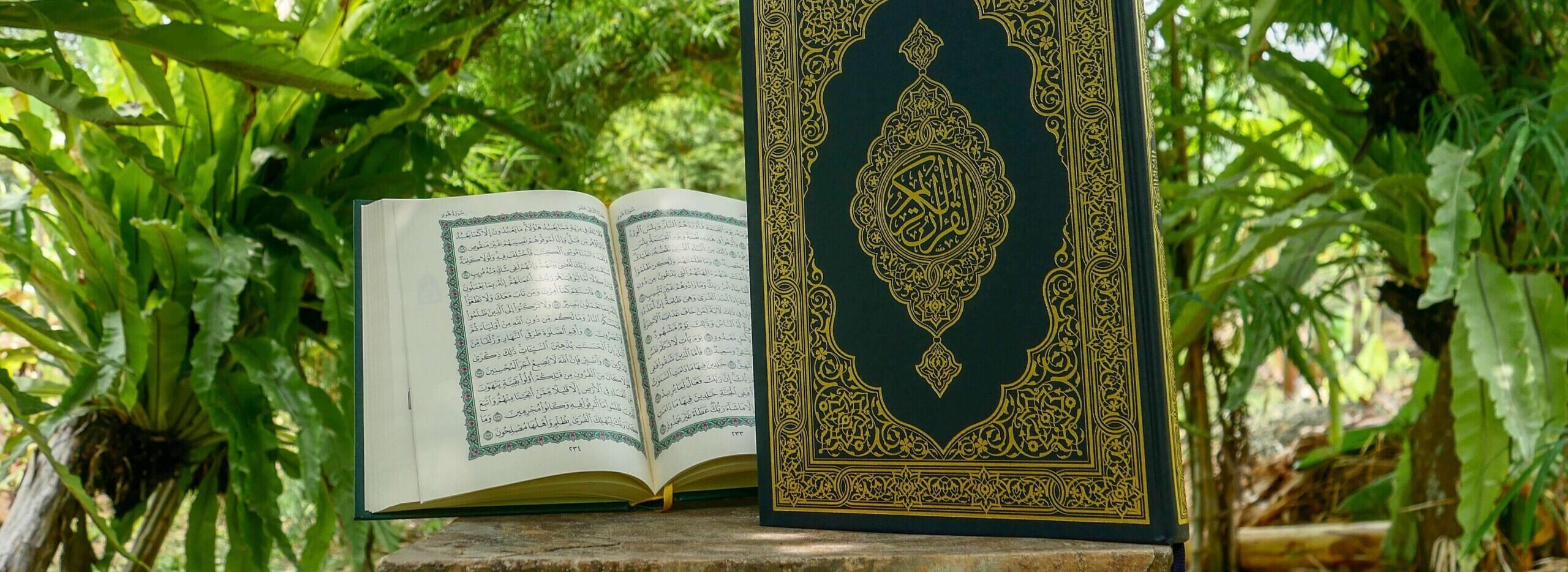
The Qur’an can feel intimidating, challenging, mysterious, and maybe even a little scary. But it was written for us by our Most Merciful and Loving Creator – so surely it must hand us the the keys to unlocking great mental, emotional and spiritual health? And how we approach this book, and our biases and expectations, can make all the difference to how well we reap the benefits.
Together, let’s walk through some important steps needed in order to approach the Qur’an as an effective aid for our mental health and wellbeing:
- 1: Unlearning trauma – letting go of what’s toxic
- 2: Making the Qur’an your friend
- 3: Deconstructing the ego – the Qur’an as your mirror
- 4: Reclaiming your autonomy – establishing a direct line to Allah
- 5: Five important mental health themes to look out for in the Qur’an
- 6: Where to start based on your mood
Acknowledging complicated relationships with the Qur’an
“We have not revealed the Qur’an to you to cause you distress, but as a reminder to those in awe [of Allah].” — Qur’an 20:2-3
First of all, let’s take a moment to think about how the Qur’an genuinely makes you feel. Not how you think you should feel.
You might feel ashamed to admit if you don’t have the best relationship with Allah’s book. But all relationships are complicated. So let’s put any shame and judgment aside, and take a moment to be really honest about how you feel when you read the Qur’an, (or how you feel when you imagine reading the Qur’an).
Remember, it’s possible to have positive and negative feelings towards something at the same time – that’s normal. You might often feel several of these:
- Comforted
- Bored
- Scared
- Relaxed
- Stressed
- Intimidated
- Confused
- Heavy
- Light
- Sad
- Hopeful
- Unworthy
- Not good enough/failing
- Disconnected
- Hypocritical/sinful
- Relieved/peaceful
1. Unlearning religious trauma
Sometimes religious trauma can get in the way of our relationship with Allah, but we can’t start to heal unless we acknowledge it.
How we feel about something is shaped by our experience.
As children, all too many of us were taught the Qur’an in a harsh, or unforgiving way – it’s used to win arguments, scold you, or remind you of how you will be punished.
Often we’re not taught the Qur’an by people who have had any sort of proper Qur’anic education. It’s just something that ought to be done, like doing the dishes.
Add on top of this the impact of living in an Islamophobic society, where the Qur’an is routinely mocked and hostility is everywhere.
One exercise that might help you is to find a quiet moment and try writing down your feelings towards the Qur’an. You might think of specific experiences you’ve had related to this topic that have impacted you – whether positive, negative or neutral:
- are there any moments or points in your life where your relationship with Allah changed? What happened? What do you wish had happened? What did you learn?
- are there any thoughts and feelings you are carrying that feel like they belong to someone else?
- are there any questions you have that need an answer – perhaps questions you’ve been ignoring or avoiding?
- which parts of what you’ve written feel unexpected, heavy or significant in a way you hadn’t realised before?
This isn’t about judgment or blame. It’s about understanding yourself better through gentle curiosity and self-compassion, to give yourself permission to open up a new chapter in your journey.
Here are a few more resources that can help you understand and process religious trauma:
- Read more about healing from trauma
- Read this guide to dealing with religious pressure
- Self-help tips: Learn to take charge of your healing journey
- Handpicked Muslim mental health resources
Is what you’ve been told true?
You might have seen or heard things about the Qur’an which make you confused, uncomfortable, or raise questions you struggle to answer.
The world is full of people calling themselves ‘scholars’ and spreading their dodgy opinions to millions of people online. These ideas get repeated, over and over, until they’re so widespread people assume they must be true.
You’ll find ‘religious’ people who tell you not to ask questions, because they think your job is to shut up and obey. Or they tell you that thinking and questioning will lead you away from the straight path.
You will also find people who simply lack the expertise, skills, and confidence, to challenge popular opinions and offer alternative views, so instead they make weak arguments supporting things that you might, deep in your heart, believe are wrong.
It’s easy to see why some of us struggle to even read the Qur’an, let alone fall in love with it!
Now consider that, in the Qur’an, you are constantly invited by Allah to question, ponder, reflect, study, discuss, and look again, deeper. You’re supposed to go on a journey with it.
Allah isn’t scared of questions, people are.
Open your heart and let go
“He is the One Who sends down rain after people have given up hope, spreading out His mercy. He is the Guardian, the Praiseworthy.” — Qur’an 42:28
To open your heart to the Qur’an and all it’s possibilities, it’s time to let go of any guilt, shame, or anger you feel towards this book. When you do this, you’ll start to experience benefits in the Qur’an for your mental health more fully, and gain access to your own personalised gift from Allah.
You can choose to start afresh. It is up to you. You don’t need to be an expert. All you need is sincerity and willingness to try.
If you’re unsure how, don’t worry I’ve got you!
Keep reading for new ideas on how to genuinely connect with the Qur’an, access non-judgmental resources, and explore some themes and concepts you might not have come across before. Let’s begin where you are.
Approaching the Qur’an for your mental health
“And We send down of the Qur’an that which is a healing and a mercy to those who believe” — Qur’an 17:82
The Qur’an is truly unlike any other book. This unique style can can feel strange and difficult because it is truly very different to everything we’re used to.
The Qur’an’s unique style is designed to speak to different hearts and minds on different levels. It seamlessly intertwines guidance, metaphors, parables, and principles, balancing encouragement and warnings.
The Qur’an is a dynamic symphony of moral logic and Divine truth. Its themes flow into new themes, sometimes suddenly, in a way that might remind you of how your thoughts flow from one thing to the next in a constant and interconnected movement.
Arabic and non-Arabic speakers alike can perhaps best witness the untranslatable melodic flow and powerful energy of the text by listening to the Qur’an being recited.
Take a moment to listen:
What does the Qur’an say about mental health?
The Qur’an is about how to live, and the path to peace.
The advice in the Qur’an is designed to bring how we think, feel and act, into alignment with our fitrah, (innate disposition of surrender to Allah).
By proactively turning to Allah and putting our trust exclusively in Allah’s self, we can find tranquillity and contentment, and live in harmony with others and the natural world.
“He is the One Who accepts repentance from His servants and pardons sins. And He knows whatever you do.” – Qur’an 42:25
2. Making the Qur’an your friend
Open your heart to the unexpected
“Read! And your Lord is the Most Generous, who taught by the pen, Taught man what he knew not.” — Qur’an 96:3-5
You can’t step in the same river twice. Who you are right now, is not who you were yesterday. Your life is in constant movement, your thoughts are in constant movement, and your heart is in constant movement.
If the Qur’an is a guidance for every age, every place, and every heart, who is to say that the Qur’an won’t show you something different depending on the specific moment in time and space that you are reading it?
“Someone once told me, read the Qur’an as though it was revealed to you directly. It’s made me reflect on some of the verses very differently and changed my relationship with Allah.”
As you evolve so will your level of insight.
If you open the Qur’an expecting to see the same thing you saw yesterday, perhaps you might overlook a fresh new insight, relevant to your present moment.
Ask yourself: what are these verses saying to me today?
Don’t make it heavy!
“Do good deeds properly, sincerely and moderately and know that your deeds will not make you enter Paradise, and that the most beloved deed to Allah is the most regular and constant even if it were little.” — Prophet Muhammad (pbuh)
Islam is supposed to make life better, not worse. It’s supposed to make you feel light, not heavy.
Sometimes we’re raised with a lot of ‘strictness’ and formality when it comes to the Qur’an. Respect is crucial, but you don’t have to be super formal with your approach.
A few minutes here and there, digging into topics that interest you, is totally valid. You’re doing this for you, not to make anyone else happy, so approach the Qur’an in a way that feels comfortable.
Build familiarity gently
If you want to make friends with someone, you invest time with them. A quick coffee here and there. eventually that leads to spening longer together. And there will be times where you don’t spend much time, but the love and connection is still there when you reunite. Building a relationship with the Qur’an is the same.
Of course, you can set yourself goals if you want, and certainly take it seriously, but don’t let pursuing the Qur’an become a burden, or a source of guilt – especially if you’re already struggling with your mental health.
Aim for comfortable habits.
Click for some Instagram follow recommendations to connect with the Qur’an
Here are some accounts that make interesting, bitesize content, to help you connect with the Qur’an. Check them out and see which ones speak to you:
- @reflectionsofquran
- @thequrandecoded
- @talhaghannam
- @jessicalaynemcdonald.2025 (a Christian woman reading and researching the Qur’an and tafsir for the very first time reflects on what she’s reading – a fascinating perspective – would recommend her YouTube channel, playlist “A Christian Reads the Qur’an” too).
💡 Keep a copy of the Qur’an handy by your bed, or on your desk, you can dip in and out whenever.
“I ask Allah for guidance for the day ahead, say bismillah and open the Qur’an at random every morning. I ponder those few verses throughout the day, thinking deeply and reflecting on how they apply to me and I research the verses if I don’t understand them. Honestly it’s an anchor and gives me a healthy focus that takes me away from my anxious thoughts. It gives me something interesting and reassuring to hold on to. I love it.”
“Surah Yusuf (chapter 12) brings me so much comfort. And I find listening to it being recited very soothing when I’m feeling anxious.”
3: Deconstructing the ego: The Qur’an as your mirror
“There was certainly in their stories a lesson for those of understanding. Never was the Qur’an a narration invented, but a confirmation of what was before it and a detailed explanation of all things and guidance and mercy for a people who believe.” — Qur’an 12:111
The Qur’an was written by the One who created humanity. And who could understand human psychology better than Allah?
If you read the Qur’an carefully, you’ll begin to recognise familiar characters from your own life, and their behavioural patterns, jumping out at you.
One of the most powerful things you can do is to relfect on how the parables in the Qur’an mirror your life and circumstances.
You are every character in the Qur’an
The more deeply you reflect, the more the psychology of how different characters react to their blessings and hardships will start to feel very familiar.
If you look hard enough, you will see that in many ways, you embody all the archetypes of humanity outlined in the Qur’an – the good, the bad, and those wavering in-between.
Search your soul for all the micro ways in which you might be acting like Pharaoh, or the people of Thamud, or the people who lost hope just before a battle.
Think of all the ways you’ve shown kindness like the Prophet Muhammad (pbuh), stood firm like Prophet Musa (pbuh), or repented like Prophet Yunus (pbuh).
You might not always be the main character in the verses you’re reading. In some moments, you could be the villain, the observer, the obstacle, the test, the helper, or someone else you weren’t expecting.
Did you ever find it relatable when God described any of these people:
- The brother of Yusuf (pbuh) who realised things were wrong?
- The people who complained about the food Allah was sending them after they fled Egypt
- The men with a flourishing gardens
- The people who boasted that life was too easy so God replaced their ease with hardship
- The women who gossiped about Yusuf and Zulaykha
- The people who accused Maryam of being unchaste before hearing her side of the story
- The donkey carrying books
- The companions in the cave
- The Queen of Sheba trying to decide true from false
- The ant that Prophet Suleyman hears
- The magicians
- The man who was a secret believer in the court of Pharaoh
- The man whose boat has a hole put in it by Khidr
Notice what Allah tells you about different characters – the details are intentional. What motivates them and what discourages them? What do they strive towards or away from?
What Allah does not tell you about the characters you’re exploring? Why do you think some parts of their story left blank – that’s intentional too.
Notice if the story is focused on the character’s actions, or their reactions, or their inaction? And ponder why?
The more you read the more you notice.
And the more you understand who you are, and who you have the potential to become.
The story of the Qur’an is your story.
“A teacher once taught me that everyone has an inner-Pharaoh, and our job is to drown him. It made sense when I thought of the story of Musa as a kind of universal truth about facing our inner demons and our ego.”
It might be uncomfortable at first when you begin to see the sides to yourself you typically fail to notice (or prefer to ignore) – but it can be liberating too.
By getting to know the Qur’an you can get to know yourself, directly from the words of the One who created you.
This can have a monumentally positive impact on your mental health, and give you a clearer sense of direction and purpose.
4. Reclaiming your autonomy: establishing a direct line with Allah
“Read! In the Name of your Lord” — Qur’an 96:1
Since the death of our Prophet (pbuh) people have been arguing about what the Qur’an means. The only reason Islam spread and flourished was because tolerance is a quintessentially Islamic characteristic, (although in the internet age it might not feel like it).
If Allah wanted us to all think the same we would.
Surely disagreement is actually a mercy, because imagine how dull life would be otherwise?
The point isn’t necessarily about reaching a conclusion, but the proactive, heartfelt effort you’re making to learn and understand.
You will see according to your disposition, personality and your spiritual level.
If you’re always waiting for someone else to tell you what to think, and how to feel about Qur’anic messages, you could be losing out.
Whoever you seek knowledge from cannot live your life for you, or know what’s in your heart, but Allah can. It is always up to you to apply what you learn to your own present situation, and that always requires a degree of personal interpretation. You are working with subtleties that only you and Allah know about. And Allah is Al Lateef, the Subtle.
You can’t force yourself to agree with people’s interpretations, nor force anyone to agree with you.
It’s ok to hear something and think ‘that doesn’t sound quite right to me’.
In fact if something tugs at your conscience, it might be something you need to keep studying and researching before you feel comfortable reaching a conclusion.
“For me, finding the balance with the Qur’an was tricky. At one point I felt this intense level of anxiety that if you’re not a scholar you’re reading it wrong. And I had a lot of stress about how unqualified I was, but at the same time I didn’t agree with the interpretations from people who claimed to be qualified. When I just decided this Book is for me no matter what, it changed things. I am allowed to read it. I know it sounds silly, but I wish someone said it.”
Arrogance vs humility when reading the Qur’an
“We elevate by degrees whomever We will; and above every person of knowledge, there is one more knowing.” — Qur’an 12:76
Tafsirs (scholarly interpretations of the Qur’an) can really help you to figure out the deeper meaning of a parable or expression, and give you insight and context you would simply not have on your own.
Respecting knowledge is an important Islamic value. Having an awareness of the limitations of your knowledge and ability is also important.
Learning from others enriches our perspective, challenges our biases and assumptions and can offer us new ideas.
It’s not appropriate to dismiss the centuries of wisdom from brilliant thinkers from Islamic history. This is part of our heritage and a gift for us to treasure, even if we disagree with it.
If it feels like arrogance, be wary, and make du’aa for guidance.
“Surely your Lord alone knows best who has strayed from His Way and who is ˹rightly˺ guided.” — Qur’an 68:7
Remember, it’s ok to explore different possible meanings, even if they don’t chime with things you’ve been told by other people, or maybe seem controversial.
After all, when have human beings ever agreed with one another?
The essential ingredient is intention: sincerity, humility and willingness to learn
You get out what you put in
“So whoever does an atom’s weight of good will see it.” — Qur’an 99:7
“Don’t freak out if you don’t see what they see!”
The Qur’an yields different fruits to different types of seekers; to those who long for moral guidance, ethical instruction, mystical interpretation, philosophical exploration, legalistic extraction, psychological insight, physical healing, and beyond…
We’ll all see according to our level. We see according to our personality and thirst for true guidance.
It’s a bit like wanting to become a scientist. You could study science and end up becoming a quantum physicist, or a medical doctor, or an industrial engineer. All of these required you to study ‘science’, but the path you take and where you end up, intellectually, and spiritually, depends on what speaks to you personally.
But, there’s a limit to how far you can get studying anything on your own.
“Call upon Me, I will respond to you.” – Qur’an 40:60
“I recommend The Usuli Institute Qur’an halaqas (learning circle) with Shaykh Khaled Abou El Fadl on YouTube. He explores the many layers and meanings of each verse, as well as exploring the conflicting opinions the Qur’an. Seeing such a broad range of interpretations has totally changed my understanding of the Qur’an.”
“We will show them Our signs in the universe and within themselves until it becomes clear to them that this is the truth. Is it not enough that your Lord is a Witness over all things?” — Qur’an 41:53
“And it’s ok for you view to change – in fact the more you learn, the more likely your view is to evolve. Allah doesn’t hold us accountable for more than our capacity. I’ve definitely had my ideas flipped on their head a few times, and I kind of enjoy when that happens. It feels like I’m being elevated and expanded.”
“Pay attention to what your heart tells you. Your heart! Your heart! Your heart! A heart softened with the remembrance of Allah is the best instrument you could possibly have. If you keep your heart clean, the light of guidance will flood in.”
“If all the trees on earth were pens and the ocean [were ink], refilled by seven other oceans, the Words of Allah would not be exhausted. Surely Allah is Almighty, All-Wise.” — Qur’an 31:27
“I listen to surah Rahman for peace, I read surah Hud before facing a challenge, I read surah Yusuf when I feel hopeless. I read surah Maryam when I need comfort, and surah Anbiyah when I need motivation. Surahs Inshirah and Duha are my daily mantras.”
““Peace”: a word from a Merciful Lord.” — Qur’an 36:58
5. Five themes to look out for in the Qur’an
Reading the Qur’an to benefit your mental health is a great intention! To help you while you’re reading, here are five key themes to look out for that can benefit your wellbeing and mental health:
Theme 1: You have a purpose
“Indeed, in the creation of the heavens and the earth and the alternation of the day and night there are signs for people of reason. Those who remember Allah while standing, sitting, and lying on their sides, and reflect on the creation of the heavens and the earth [and pray], “Our Lord! You have not created [all of] this without purpose. Glory be to You! Protect us from the torment of the Fire.”” — Qur’an 3:190-1
You are here for a reason. Allah did not create you aimlessly, which is why chasing ‘fun’a good time’ alone feels so empty.
When you’re reading look out for when Allah gives you direct instructions. Don’t just focus on what you have to do, but shift your focus towards understanding what outcome the guidance is intended to achieve. This can help you find a sense of purpose.
When Allah gives you criteria for a decision, pause and reflect. Consider what Allah is saying about what is worth your attention and what is not.
What things shape and shield your time, money, effort and personal growth?
Theme 2: You have a clear enemy
“Surely Satan is an enemy to you, so take him as an enemy. He only invites his followers to become inmates of the Blaze.” — Qur’an 35:6
Shaytaan/Satan is your enemy.
From the day human beings were created, Shaytaan refused to bow down to us and acknowledge our Divinely gifted superior nature.
Instead he vowed to mislead us and knock us off the path to Jannah.
That means as you walk through life, there is a force dedicated to derailing you – but his power is limited to whispering and persuasion.
Notice when and where Shaytaan pops up in the Qur’an:
- What is he associated with?
- Do you know are his characteristics?
- What is his role?
- Who follows him and who does he follow?
Think about his relationship to:
- Envy
- Hostility
- Deception / false perception / delusion
- Action / inaction
- Cowardice / self-doubt
- Arrogance / hypocrisy
- Despair
- Temptation / recklessness
- Suspicion / gossip
What does Shaytaan represent to you literally, metaphorically and spiritually?
How does he show up in your reality?
Theme 3: You deserve dignity – freedom from injustice and oppression
“O humanity! Indeed, We created you from a male and a female, and made you into peoples and tribes so that you may get to know one another. Surely the most noble of you in the sight of Allah is the most righteous among you. Allah is truly All-Knowing, All-Aware.” — Qur’an 49:13
The result of goodness is goodness.
Bad things make us feel bad.
Notice when and how the Qur’an ties in with your intuition and common sense!
Notice how much of the Qur’an is dedicated to telling people to:
- mind their own business
- stop judging
- make peace
- forgive and let people get on with their lives, even if they’re not great people
- seek forgiveness
- be kind, even when it’s hard
“And if they incline to peace, then incline to it [also] and rely upon Allah. Indeed, it is He who is the Hearing, the Knowing.” — Qur’an 9:61
Notice how you’re only encouraged to make a stand when being a bystander would lead to injustice:
“The way of blame is only against those who oppress mankind, and wrongfully rebel in the earth. For such there is a painful doom.” – Qur’an 42:42
- What does this mean in terms of the way you are treated and the way you let people treat you?
- Are you being just to yourself?
- What values do you hold on to and how do you manifest them in relation to yourself and others?
Theme 4: Faith is your lifeline through adversity
“If Allah should aid you, no one can overcome you; but if He should forsake you, who is there that can aid you after Him? And upon Allah let the believers rely.” — Qur’an 3:160.
This theme is hard to miss. No matter what we go through, Allah will suffice a believer. Faith is hope.
Belief is strength.
This means that for a sincere believer, failure is literally impossible.
Our struggles are never pointless.
Our pain is always witnessed and our perseverance is always rewarded.
Success will come in the end – it is a promise from Allah for those who don’t lose patience and give up hope.
Whatever you are going through, you can get through it.
Hold on, your effort is soon to be rewarded, inshallah.
“Say “Allah is sufficient for me. There is no god except Him. In Him I put my trust. And He is the Lord of the Mighty Throne.”” — Qur’an 9:129
Theme 5: You have to take action
“Indeed, We created humans in the best form. But We will reduce them to the lowest of the low. except those who believe and do good – they will have a never-ending reward.” — Qur’an 95:4-6
Trust in Allah is crucial, but the Qur’an also makes it clear, you must play your part too.
Faith without the corresponding action leads to problems.
Notice how often the people who believe but fail to take action are referred to as hypocrites and troublemakers.
And notice what happens to the people who only pray in times of need and forget Allah as soon as they get what they want.
Also notice how Allah talks about people who only thank Allah when they are happy, but then despair of Allah when they are tested.
Part of looking after your mental health and wellbeing is taking action to feel better. This could mean establishing a good self-care routine, reaching out for help from people you trust, making du’a, or learning about trauma healing.
The more you support your mental health and wellbeing, the better able you will be to put the lessons of the Qur’an into action:
- Guide to Islamic self-care to avoid burnout
- Learn about healing from trauma and abuse
- Guide to healing your relationship with prayer
- Guide to starting a conversation about your mental health
“So establish prayer, give alms, and hold fast to Allah. He is your Guardian. What an excellent Guardian, and what an excellent Helper!” — Qur’an 22:78
Where should I start reading based on my mood?
“He said, “I am going to my Lord, He will guide me!”” – Qur’an 37:99
Where and how you start exploring the Qur’an is up to you. Ask Allah, and follow your heart. Here are some suggestions based on themes you might be searching for:
Diving right in
Many people like to start reading the Qur’an from the end of the text, with the shorter chapters which are only a few verses long.
The shorter verses are among the first to be revealed so it’s a great place to start if you’re new to the Qur’an.
💡 Set your intention, and ask Allah to show you what your heart most needs to hear, then open the Qur’an and trust that where you land is where you’re meant to be.
Comfort for a heavy heart
A good place to start is…
- Surah 94, Al Inshirah
- Surah 93, Ad Duha
- Surah 12, Yusuf
- Surah 19, Maryam
Stories of inspiration and hope
A good place to start is…
- Surah 11, Hud
- Surah 21, Anbiya
- Surah 18, Al Kahf
- Surah 48, Al Fath
Lessons in human nature
A good place to start is…
- Surah 20, Ta Ha
- Surah 16, An Nahl
- Surah 28, Al Qasas
- Surah 31, Luqman
This exceptional tafsir series from the Usuli Institute full of historical analysis, comparative thought, modern application and thematic analysis is a great place to start. Try picking your favourite surah from this list.
Beautiful recitations to add to your playlist:
You might also be interested in:
- Dhikr and meditation
- Prayer and mental health
- Exploring your spirituality
- Finding your path
- Spiritual reflections on the blog
“And I did not create the jinn and mankind except to worship Me.” — Qur’an 51:56